Coetzee’s Waiting for the Barbarians is about the magistrate’s journey to try to help the Barbarian people tortured by the empire. Throughout the novel, Coetzee details the different forms of torture that the wicked Colonel Joll employs and shows how ultimately, torture is an ineffective form of interrogation because at some point, the ones tortured will say whatever it is that their captor wants to hear in order to stop the mind numbing, crippling pain. In addition to physical torture, Joll utilizes psychological methods of torture that humiliate and destroy a person’s resolve and morale.
The most prominent form of psychological torture was solitary confinement. After being accused as a traitor of the empire, the magistrate is sent to solitary imprisonment to await trial. The magistrate says that “the texture of the days” are “as dull as porridge” (Coetzee 86). The intricate flow of events in the external world have lost all interest in comparison to the visceral pangs of hunger and physical functions which define his solitary existence: “I build my day unreasonable around the hours when I am fed. I guzzle my food like a dog. A bestial life is turning me into a beast” (Coetzee 80). By stripping away basic necessities, the magistrate is forced to beg like a dog for food, reducing him to a less than human being. Dehumanizing the magistrate fills him with feelings of unworthiness and rejection. Furthemore, the lack of human interaction and “the boredom of living one hour after another” (Coetzee 87) amplify feelings of rejection and loneliness.
This psychological toll has a deeply negative effect on a person’s sanity. A complete lack of human contact causes mental deterioration as the prisoner begins to experience hallucinations or chronic depression to cope with the loneliness and isolation. In a research survey by the American Association for the Advancement of Science, 41 percent reported hallucinations, and 27 had suicidal thoughts — all levels significantly higher than those of the overall prison populations; furthermore, isolated inmates were found seven times more likely to hurt or kill themselves than inmates at large. Hence, solitary imprisonment harms the inmates further rather than rehabilitating them for reentry into society.
“We are all social beings, and people who are in environments that deny the opportunity to interact in meaningful ways with others begin to lose a sense of self, of their own identity” (Stromberg).
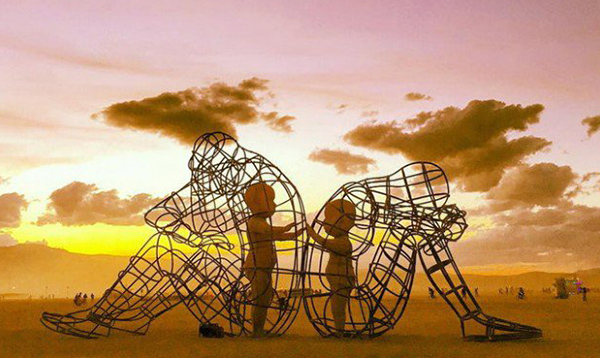
“Love” created by Alexandr Milov from Odessa, Ukraine.
Thus, as demonstrated through the magistrate’s torture in isolation and evidence of mental deterioration, solitary confinement proves to be an ineffective form of imprisonment because it further dehumanizes and humiliates inmates that need more care and compassion than anyone else to get back on their feet. Part of helping rebuilding someone’s life is to reach out to them. Experiencing positive social interaction helps inmates recognize the good things in life and humanity and that maybe, just maybe, their poor soul is redeemable. That glimmer of hope for redemption is what helps motivate prisoners to become better versions of themselves. Programs, such as Shakespeare Behind Bars and Prison Pen-Pals, help inmates work through their past hardships and insecurities, develop life skills that will ensure their successful integration into society, and let them know that they still matter.
At the end of the day, we all want to be loved.
Works Cited
Coetzee, J. M. Waiting for the Barbarians. Minerva, 1997.
“Mission & Vision.” Shakespeare Behind Bars, 15 Oct. 2018, http://www.shakespearebehindbars.org/about/mission/.
Stromberg, Joseph. “The Science of Solitary Confinement.” Smithsonian.com, Smithsonian Institution, 19 Feb. 2014, www.smithsonianmag.com/science-nature/science-solitary-confinement-180949793/.

 Journey through the Past