A couple days ago, I began the winter quarter of my first year. As I sat and listened during my humanities core lectures about how the Incas and Andean people resisted total Spanish conquest by retaining parts of their culture, I wondered, why were the Native Americans in the U.S. unable to achieve the same level of coexistence as the Spanish and Incas? Why were they not able to create a new culture that combined both British and Native American aspects?
After much research, I realized that the difference between the colonization of the indigenous peoples of the United States and Inca rests on the fact that the British and Spanish arrived in the Americas for different reasons. The British sought sanctuary from religious persecution and political corruption in England and wanted to form their own utopia, a new community of their own. On the other hand, the Spanish’s main purpose for conquering the Americas was to find gold and silver. Thus, they were more open to working with the Incas and Andeans in order to reach their main goal.
As a result, this lead to different sociological transformations in the colonies of the Americas: assimilation and acculturation.
“Acculturation is the transfer of values and customs from one group to another while Assimilation is the cultural absorption of a minority group into the main cultural body” (Nadiger).
The Native Americans of the United States were forced to assimilate to the British culture; to lose the old and learn the new. The British wanted no connection or association with the “savage” culture of the Indians. As devout Christians, they wanted to form their own utopia based on their values. Since they sought a sanctuary, the British felt more compelled to force the Native Americans to renounce their culture and adopt theirs. After the gruesome events of the American Indian Wars in the late 19th and early 20th centuries that decimated the Native population, the United States government outlawed the practice of traditional Native religious ceremonies and established Native American boarding schools that forced children to abandon their Native cultural practices in an attempt to “civilize” them. Furthermore, the Dawes Acts of 1887 and the Indian Citizenship Act of 1924 granted the Natives citizenship in exchange for forced assimilation on allotted tribal lands or reservations. During the majority of the time, the Natives were unable to maintain tribal sovereignty. Thus, the method of colonization and conquest of the British-Americans resulted in the Native Americans losing parts of their culture in order to create and maintain a homogenous Western American culture.
Whilst the British conquered the North, the Spanish conquered the South. During the colonial period of Spanish America, the Inca, the Andeans, and the Spanish fashioned parts of the Inca Empire into the institutions and practices of the Spanish empire, shaping a new hybrid culture. This is largely due to the fact that the Andean people acculturated to the Spanish conquerors and became essential to the smooth running of the Spanish empire. In an acculturated community, “individuals of a differing culture try to incorporate themselves into the new more prevalent culture by participating in aspects of the more prevalent culture, such as their traditions, but still hold onto their original cultural values and traditions” (Nadiger). The kurakakunas, Andean elite, and Incas altered their communication of their power through their clothing; they took symbols of power of the Spanish and made their own identity, their own fashion, own way of being, while still navigating under the cultural rules and norms of the Spanish empire. Through the kurkakunas’ willful compliance, the Spanish were able to control and govern Andean commoners through the leadership of the Andean elite. The kurakakuna enforced Spanish laws and ensured that the Spanish had a consistent work force for their silver mines in Potosí. Through their unique, important place in colonial politics, the kurakakuna also served as voices for the Andean commoners. They requested lower taxes and better hours for the workers and were able to spark real change that helped the Andean commoners. The hybrid culture that was emulated by the kurakakuna protected the indigenous culture from truly fading away. Thus, the acculturation of the Andeans, Inca, and Spanish allowed for the preservation of the indigenous culture. To this day, many people in Peru still speak Quechua, the Inca language.
The distinction between the two concepts of adaptation to colonial rule is evident through the following images.
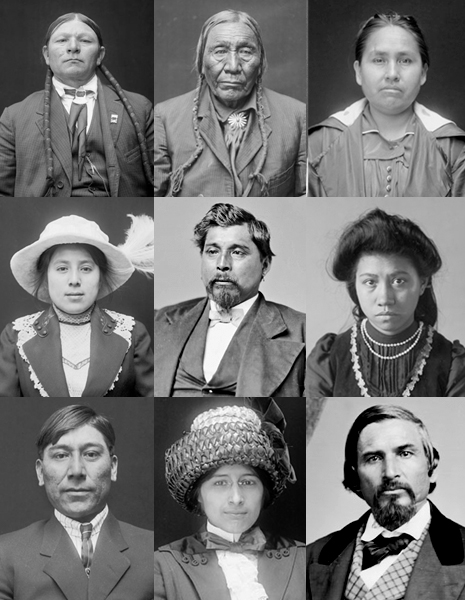
Portrait of Native Americans from the Cherokee, Cheyenne, Choctaw, Comanche, Iroquois, and Muscogee tribes in Euro-American attire. Photos date from 1868 to 1924
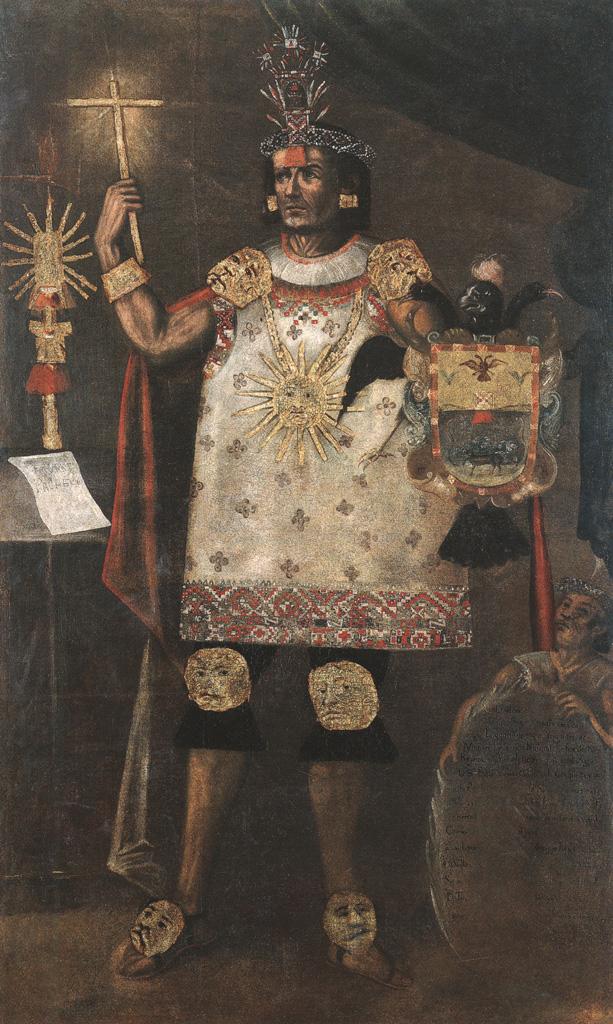
Figure 3 Portrait of Don Alonso Chiguan from “We are the Other: Peruvian Portraits of Colonia Kurakakuna” pp 206
The first image contains portraits of Native Americans undergoing forced assimilation in the United States from 1868 to 1924 that demonstrate the loss of Native culture over time. The man in the top left corner still has his Native braids that signify his connection to his tribe. However, the man in the bottom right looks mainly Western; he has lost any physical sign of his Native heritage. The portraits of the Native Americans demonstrate their complete assimilation to American culture with their suits and ties and dresses.
Conversely, the second image demonstrates the synthesis of Spanish, Inca and Andean culture through the clothing of Don Alonso Chiguan. In his portrait, he wears the Spanish symbols of the cross and lion, while at the same time representing his own culture through his coat of arms, the sun, and mascapaycha. These portraits of the kurakakuna were an essential part of the acculturation process as it communicated to the commoners the authority of the Spanish as well as the perseverance of the Inca Andeans.
Through analysis of historical texts and images, it is evident that the different motives of the British American and Spanish empires lead to different colonial methods to incorporate indigenous people into their empire.
Works Cited
- Andrien, Kenneth J, and Rolena Adorno. Transatlantic Encounters: Europeans and Andeans in the Sixteenth Century. pp 203-231. University of California Press, 1991.
- “Cultural Assimilation of Native Americans.” Wikipedia, Wikimedia Foundation, 25 Dec. 2018, en.wikipedia.org/wiki/Cultural_assimilation_of_Native_Americans#The_role_of_the_Supreme_Court_in_assimilation.
- Nadiger, Bistappayya. “What Is the Difference between Acculturation and Assimilation?” Quora, Quora, 24 Aug. 2016, http://www.quora.com/What-is-the-difference-between-acculturation-and-assimilation .
- Zitkala-S̈a , and Susan Rose. Dominguez. American Indian Stories. pp 2-27. University of Nebraska Press, 2003.
 Journey through the Past